
When I created this site two and a half years ago, I received many questions from my friends and family about the key ingredients in Korean cuisine. Anxious not to miss out on truly essential products, I then offered a list of 9 ingredients to have to get started.
With more hindsight, and especially thanks to discussions with my customers, this list has gradually been refined.
The objective of this article is therefore to present you with the 5 essential ingredients for starting out in Korean cuisine — products that are difficult to replace with Japanese or Chinese equivalents, and which truly structure the taste of the dishes.
One sauce, two pastes, one spice, and one oil: here are the 5 essential ingredients to recreate the taste of Korea at home!
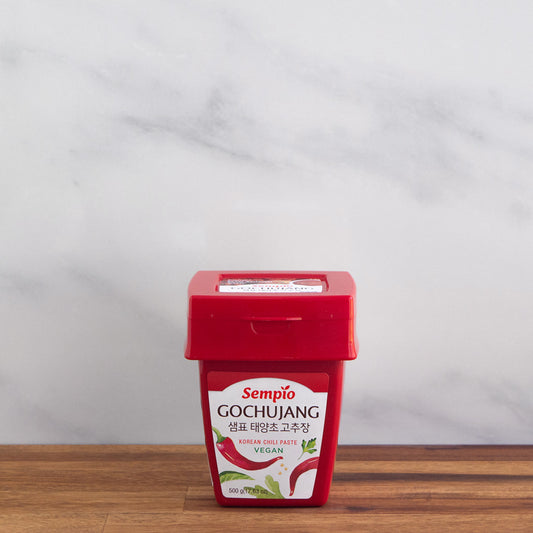
Gochujang (fermented chili paste)
Gochujang is probably the most identifiable ingredient in Korean cuisine.
This thick paste is made from red chili, glutinous rice, and fermented soybeans. It develops a complex taste, simultaneously spicy, slightly sweet, and fermented.
It is used in many recipes, starting with the iconic Tteokbokki, but it is also a key ingredient in the sauce used to season Bibimbap.
Gochujang is not really replaceable. It is neither a simple chili paste nor a classic hot sauce. It is... gochujang!
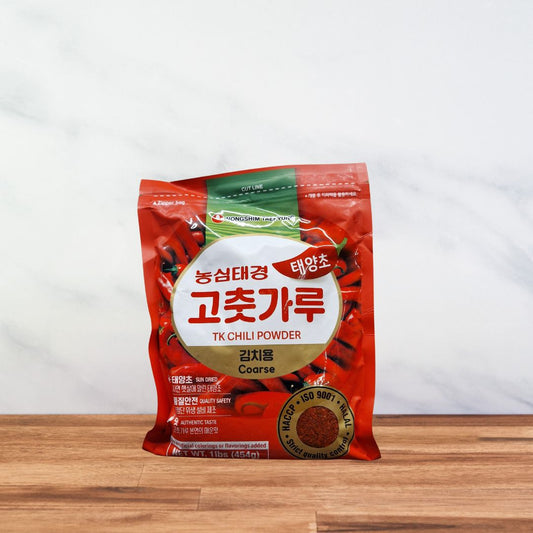
Gochugaru (Korean chili flakes)
Gochugaru is the dried chili used in Korea, usually in the form of flakes of varying fineness.
Unlike other chilies, it is less aggressive and more aromatic. It is especially essential for making your own kimchi (in flake form), seasoning many dishes, including the famous Tteokbokki mentioned above, as well as your soups and stews, and grilled or stir-fried dishes.
Often compared to Espelette pepper, I find gochugaru to be spicier, less smoky, and replacing it with something else is likely to distort the balance of your dish.
Doenjang (fermented soybean paste)
Doenjang is Korean fermented soybean paste, more rustic and intense than Japanese miso (and absolutely not sweet).
It is mainly used in soups and stews and to make certain seasonings or dips (such as Ssamjang served with Korean barbecue).
Its taste is deep, salty, and slightly earthy (an aroma similar to tapenade). It provides a very characteristic base for many dishes. It is a subtle but essential ingredient that balances Korean recipes.
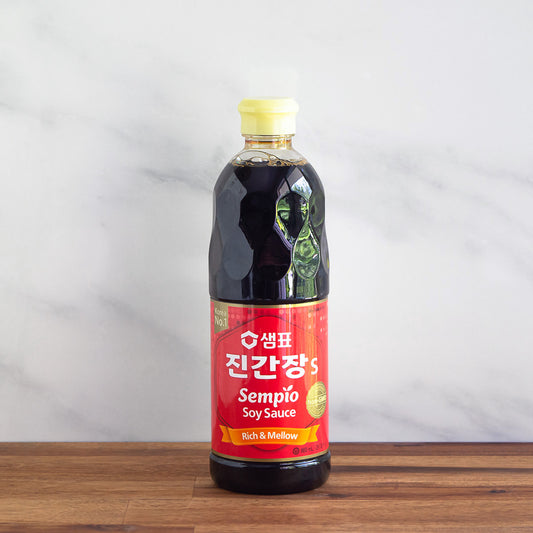
Ganjang (Korean soy sauce)
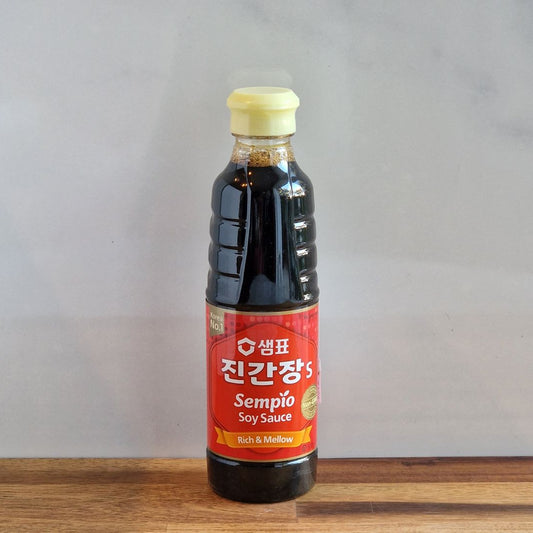
Ganjang is one of the pillars of Korean cuisine. Resulting from the fermentation of soybeans and the filtering of the previously mentioned doenjang, it is used in a wide variety of preparations: marinades, seasoned vegetables (namul), soups, and even sauces. It is an ingredient that salts while providing structure and umami flavor.
Although Japanese or Chinese soy sauce can be a good substitute in a pinch, Korean ganjang often has a lighter and more saline profile, particularly suitable for namul and broths. It is an ingredient that is used almost daily in Korean cuisine.
Toasted sesame oil
Toasted sesame oil is used as a finishing touch in Korean cuisine. It gives dishes a toasted aroma, central to balancing preparations. It is very present in seasoned vegetables, marinades, and dishes like bibimbap. It is an ingredient powerful enough to stand up to gochujang, and it is this oil that is mixed in equal proportions with gochujang to make bibimbap sauce.
Unlike a classic cooking oil, it is rarely heated for a long time. It is used more as a final touch.
What else?
With these five ingredients - ganjang, gochujang, gochugaru, doenjang, and sesame oil - it becomes possible to prepare a large part of everyday Korean recipes.
These basics cover most savory preparations. To easily complement your recipes, you generally only need a few fresh products like garlic and chives (or spring onions), which are widely used in Korean cuisine.
Then, recipes are simply built by adding the main ingredients depending on the dishes: rice, noodles, kimchi, vegetables, meat or fish, or even more specific products like rice cakes.
Find our essential kit to get started here.