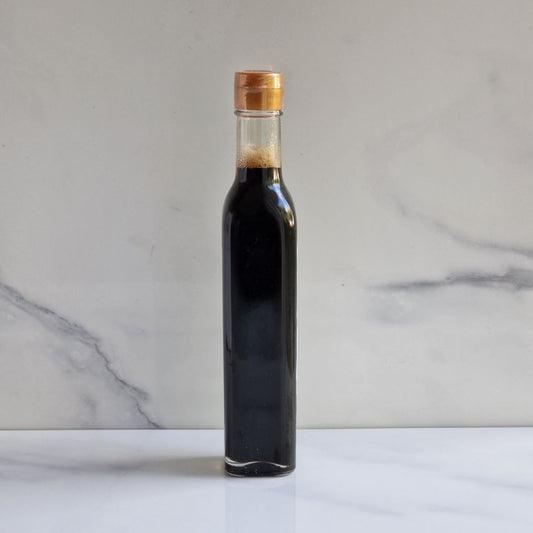
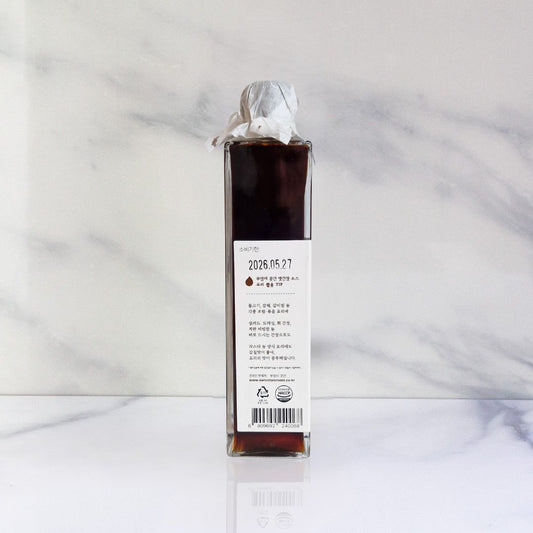
What is Korean Soy Sauce (ganjang)?
Ganjang (간장) is traditional Korean soy sauce. It is produced by fermenting meju, blocks of fermented soybeans also used to make doenjang, Korean soybean paste. After maturing in brine, the liquid part becomes soy sauce while the solid part is transformed into doenjang.
As with many fermented products, manufacturing methods greatly influence the final taste. Some sauces are made using traditional natural fermentation processes, while others are designed for more versatile everyday use.
When choosing a Korean soy sauce, the mention of natural fermentation is often a good indicator for those who appreciate more complex and developed flavors.
Jin-ganjang or guk-ganjang: which to choose?
Korean cuisine distinguishes several types of ganjang, the two main ones being jin-ganjang and guk-ganjang.
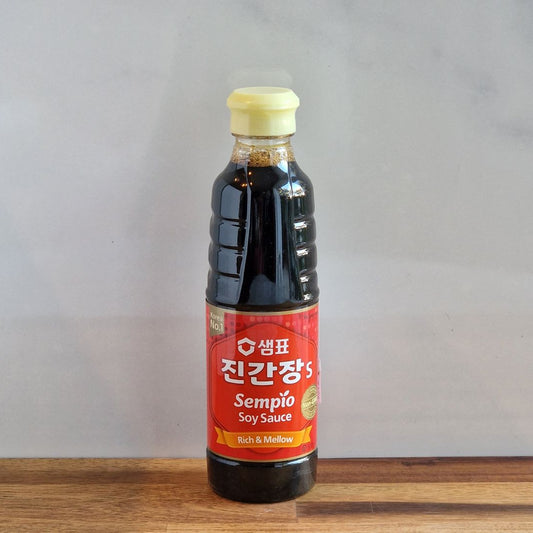
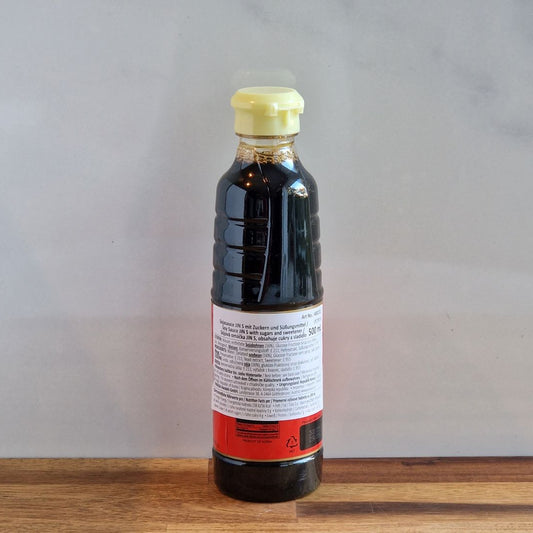
Jin-ganjang— versatile soy sauce used for marinades, stir-fries, braised dishes, and everyday seasonings. Its balanced profile makes it the most commonly used reference in Korean kitchens.
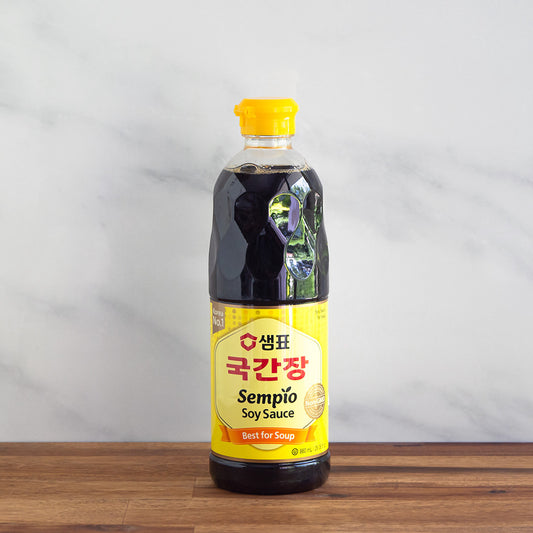
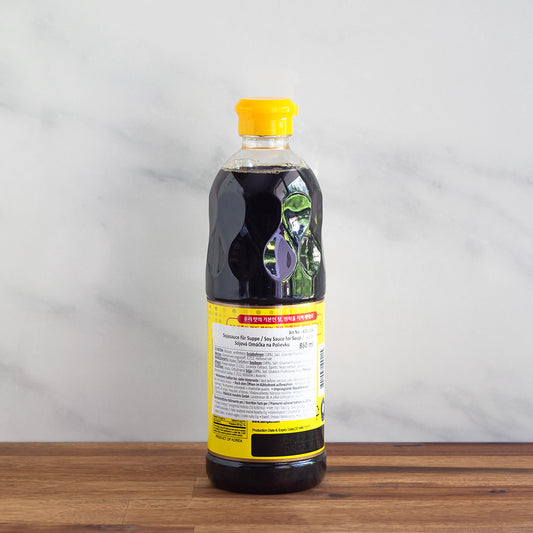
Guk-ganjang— traditional soy sauce primarily intended for soups, broths, and certain seasoned vegetables. Lighter in color but generally saltier, it allows for seasoning without excessively darkening preparations.
To discover Korean cuisine, jin-ganjang is generally the best starting point. Guk-ganjang becomes particularly useful when regularly preparing traditional Korean soups.
Korean or Japanese soy sauce: what's the difference?
Korean and Japanese soy sauces share a common origin but have distinct taste profiles.
Korean soy sauce is generally saltier and more direct on the palate. The most common Japanese sauces often offer a milder, rounder balance.
In practice, they can sometimes be substituted for each other, but the final result will differ slightly. Traditional Korean recipes are generally developed around the specific profile of ganjang.
What about seasoned soy sauces?
Some Korean soy sauces are enriched with additional ingredients to provide more aromatic depth.
Dashi-infused soy sauces, for example, combine the flavors of fermented soy with those of seaweed or vegetables used in the broth. They can be used as a finishing seasoning on rice, vegetables, eggs, or simple dishes requiring few additional ingredients.
These references generally complement a classic soy sauce rather than replacing it in everyday cooking.
How to use Korean soy sauce in cooking?
Ganjang is used in many Korean preparations: barbecue marinades, seasoned vegetables, braised dishes, dipping sauces, or stir-fried recipes.
In bulgogi marinades, soy sauce is traditionally combined with a sweet element and grated Asian pear, used to add sweetness and tenderness to the meat.
As the different varieties of ganjang are naturally rich in salt, it is best to taste before adding any additional seasoning to properly balance the recipe.
Our selection of Korean soy sauce at Korea Store
Our selection is structured around two complementary approaches.
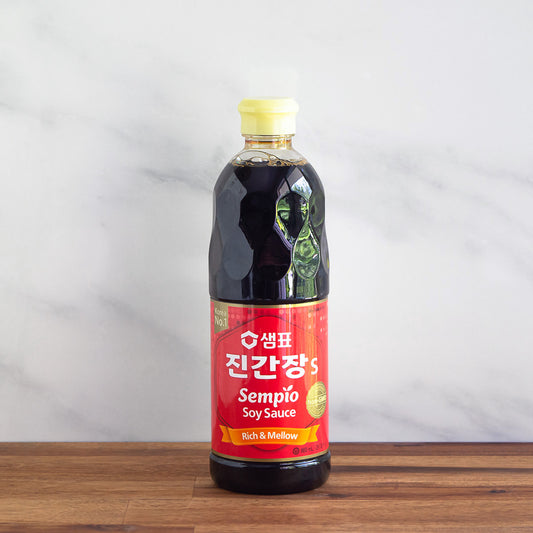
Sempio soy sauces are recognized references for everyday cooking. You will find jin-ganjang, ideal for marinades, stir-fries, and braised preparations, as well as guk-ganjang, lighter in color but saltier, traditionally used to season soups, broths, and certain vegetables.
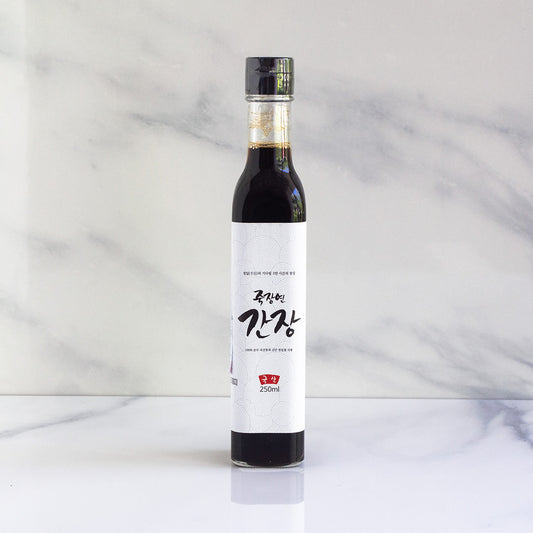
For lovers of traditional fermented products, we also offer artisanal soy sauces made using natural maturation methods (Jookjangyeon artisanal soy sauce). These references generally develop more complex aromatic profiles, particularly appreciated when soy sauce plays a central role in the recipe. Our selection also includes seasoned soy sauces, such as some dashi-infused references, suitable for finishing seasonings and table use.
You can also complete your pantry with our selection of Korean sauces and condimentsto find the essential ingredients of Korean cuisine.