What is buldak ramen?
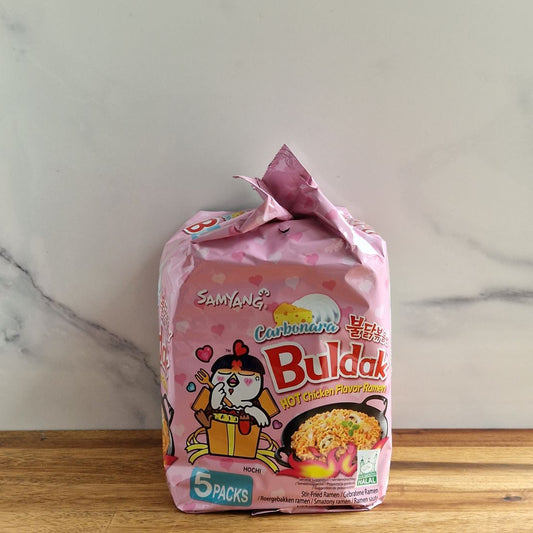
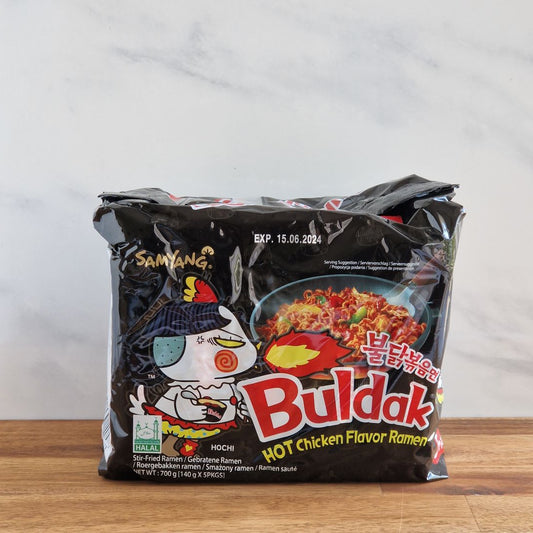
Buldak ramen (불닭볶음면, buldak-bokkeum-myeon) literally means “fire chicken stir-fried noodles”. Launched by Samyang in April 2012, this product is inspired by buldak, a Korean dish of spicy chicken. On the packets, you will also find the English name Hot Chicken Flavor Noodles.
Its international popularity grew largely with the Fire Noodle Challenge, which consists of tasting these spicy noodles and reacting to their intensity. But buldak is not a soup ramen: you cook the noodles, drain them, then mix them with the sauce. The result is a dish of stir-fried noodles, with a sauce that coats the noodles rather than a broth to drink.
To make a meal around spicy chicken, also see our Korean fried chicken recipe.
Which buldak to choose according to your spice tolerance?
The Scoville scale measures the concentration of the compounds responsible for the sensation of heat. SHU values give a benchmark for comparing the Samyang versions, even though the sensation also depends on the sauce, the amount used and each person’s sensitivity.
- Carbonara: About 2,600 SHU
- Original Hot Chicken: 4,404 SHU
- 2x Spicy: 8,808 SHU
By way of comparison, a jalapeño is around 5,000 SHU. The original is therefore slightly below this benchmark, while the 2x Spicy shows a value twice that of the original.
For a first tasting, I recommend the Carbonara. Its creamy sauce softens the perception of heat and lets you discover the buldak profile without starting with the most intense version. The original Hot Chicken suits those who want a more direct heat. As for the 2x Spicy, it is mainly for people who already know their tolerance.
Cheese buldak is another option for those who prefer a milky profile. The right choice therefore depends as much on the taste you are looking for as on the level of heat.
How to prepare buldak ramen and tone it down if needed
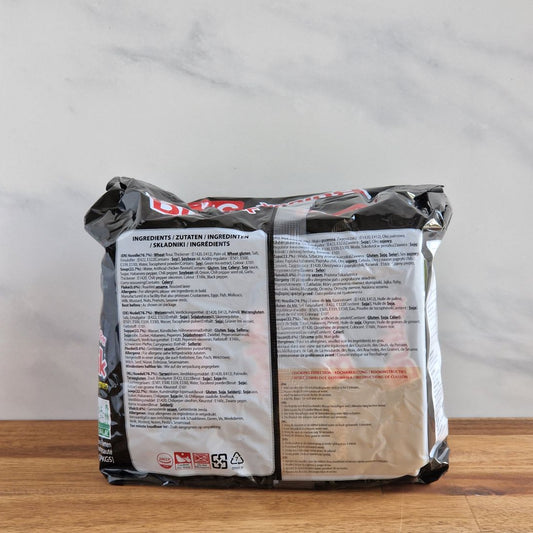
The most common mistake is to prepare buldak like a soup or to let the sauce cook for too long. To get it right, boil the noodles for about five minutes, following the instructions on the packet. Drain them, keeping a few spoonfuls of the cooking water, then take the pan off the heat before adding the sauce. Mix thoroughly: the residual heat lets it coat the noodles without cooking it directly. Finish with the seaweed and sesame flakes provided.
To tone down buldak, several ingredients can complete the dish: an egg, cheese, a little milk or vegetables. Tteok, Korean rice cakes, add a soft texture and make the dish more filling. Adjust the amount of sauce gradually if you prefer a less spicy result.
For more variety, see our recipe ideas with instant ramen and also try the creamy ramen recipe with tteok and egg.
Carbonara, Cheese, Hot Chicken, Kimchi: what the variations are worth
The different buldak flavours cannot be reduced to a heat scale. Each one offers a particular sauce profile, to be chosen according to your preferences.
- Carbonara: a creamy sauce, with a milky profile that softens the perception of chilli.
- Cheese: a cheesy note that accompanies the spicy sauce.
- Original Hot Chicken: the reference profile of the range, centred on a chilli sauce.
- Spicy Chicken: a variation geared towards a spicy taste.
- Kimchi Chicken: a note inspired by kimchi, with a fermented character that brings another dimension to the sauce profile.
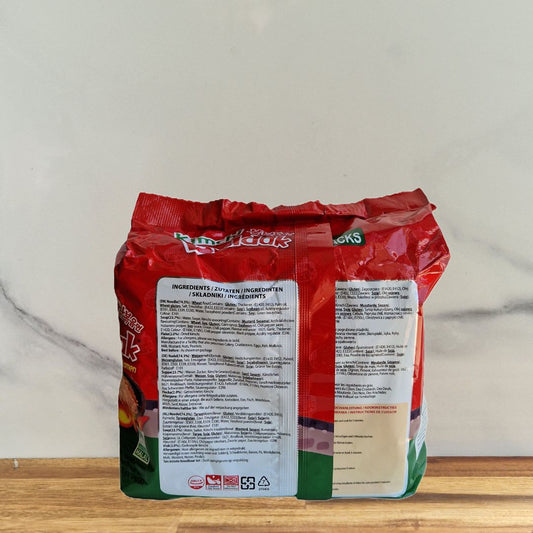
At Korea Store, these products are offered in packs of 5 sachets of 140 g. This format lets you enjoy a favourite flavour several times or compare the profiles over several meals. Samyang’s limited editions may change over time: the flavours in the collection are those available at the time of ordering.
Buldak in a Korean grocery store
Buldak became famous on social media, but it can also find its place in a more complete meal. An egg, vegetables, a few tteok or a topping of gim, Korean dried seaweed, let you vary the textures. A small amount of sesame oil added at the end brings a toasted note.
At Korea Store, buldak is part of a wider selection of ingredients for cooking Korean food at home. The aim is not only to offer viral noodles, but also to give access to the products that accompany Korean meals. To complete your pantry, find the essential ingredients of Korean cooking and our whole savoury Korean grocery range.
Instant noodles are dry products that keep at room temperature before opening. They therefore fit easily into everyday supplies, without needing to be kept cold.
 Sold out
 Sold out

 Sold out