Why Korean cuisine dries its ingredients
In Korean cuisine, drying is an ancient preservation method, particularly suited to a cuisine organised around the seasons and the pantry. Removing the water does not simply preserve the product as it is: it concentrates its taste and changes its texture. A dried mushroom thus becomes a different ingredient from the fresh mushroom it comes from.
This also explains why so many dried products are found in a Korean pantry. They take up little space and can be kept for several months when protected from moisture. They remain perishable, however: a dried product does not keep indefinitely.
Before cooking, most dehydrated products need to be rehydrated. This step restores their suppleness and allows them to be added to soups, simmered dishes or side dishes. To explore the subject further, see our guide to the dry ingredients of Korean cuisine.
What you will find in this section, family by family
The Korean dried vegetables section is not limited to vegetables in the strict sense. It brings together several families of ingredients used in Korean cuisine.
Dried mushrooms form a first important family, notably with enoki and shiitake. Dried fruits are mainly represented by jujube, called daechu in Korean, which can go into savoury as well as sweet preparations.
There are also dried plants and roots, such as Korean mugwort (ssuk), used as an ingredient in certain culinary preparations. Other items take the form of dried plant mixes intended to go straight into the pot to simmer.
Some of the dried vegetables traditionally found in Korean markets have names such as gosari, doraji or siraegi. They are notably used to prepare namul, the seasoned vegetables served among the banchan that accompany the meal. The Korea Store section, however, focuses on the families actually offered here, without claiming to cover all the dried vegetables of Korean cuisine. Also see our article on spring vegetable namul.
Dried seaweed, dried chillies and gochugaru belong to other sections. Pulses, such as lentils or beans, are also a different category.
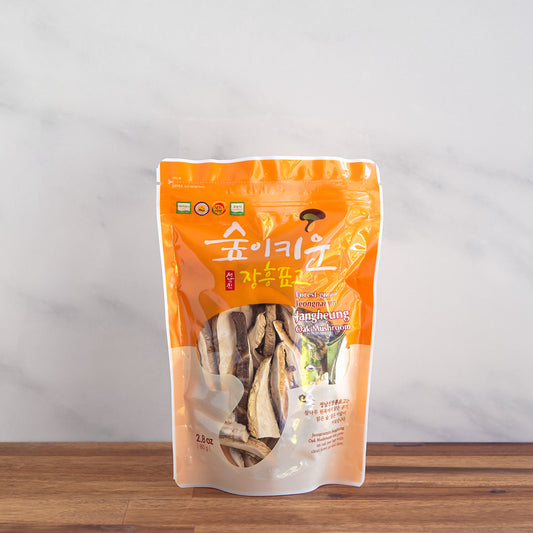
Dried mushrooms: enoki, shiitake, and which one to choose
Dried enoki can be recognised by its long thin stems and small caps, characteristic of Flammulina velutipes. After rinsing, it is rehydrated in water until it becomes tender again. The base of the stems, which stays tough, then needs to be cut off. Enoki is always cooked: it fits particularly well in a broth, a kimchi jjigae, a gamjatang or a tempura.
Dried shiitake brings more depth of flavour and a more pronounced chew. It has its own method of preparation, detailed on our page dedicated to dried shiitake.
These two dried mushrooms therefore cannot simply be swapped for one another. Enoki mainly brings its texture and its long fibres, while shiitake contributes more to the character of the dish. The Asian dried mushroom is not used like a dried cep or morel in French cooking: its role depends on the dish in which it is rehydrated.
Jujube (daechu), the dried fruit of the Korean table
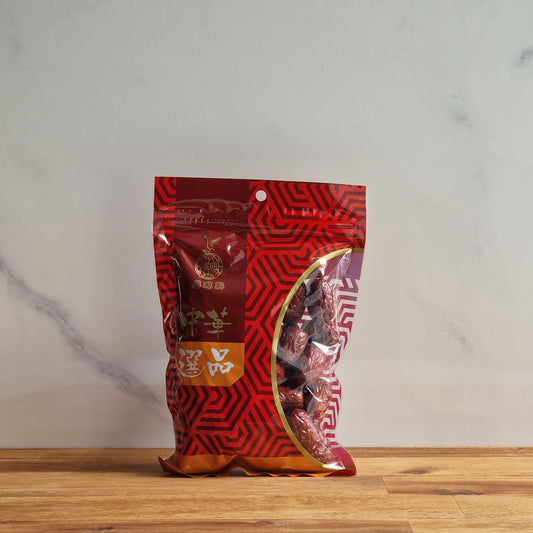
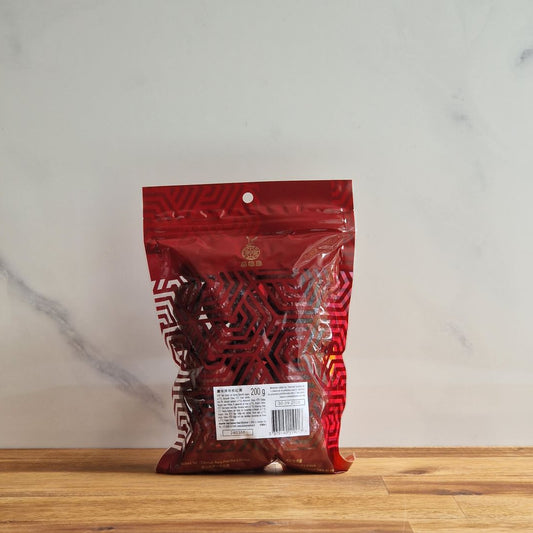
Dried jujube, also called Chinese date or red date, is the fruit of the jujube tree. In Korea, it is known as daechu (대추). Its flavour lies between that of a date and that of dried apple, with a slightly spicy note. Its flesh is supple and slightly fibrous.
Jujube has one particular feature in this section: it can be eaten as it is, with its stone, or used as an ingredient. It notably flavours broths and simmered dishes, can be chopped for an infusion and goes into certain glutinous rice preparations.
It therefore suits savoury preparations as well as sweet ones. In Korean cuisine, this dried fruit is notably associated with samgyetang and various traditional preparations.
To extend the meal around several small dishes, discover our selection of Korean banchan.
Samgyetang and dried plant mixes
Samgyetang (삼계탕) is a Korean soup of chicken simmered notably with glutinous rice, garlic, jujubes and ginseng. This soup is associated with the Korean principle of i-yeol-chi-yeol, which consists of eating hot food when the weather is hot. The dish is thus traditionally eaten piping hot in the height of summer.
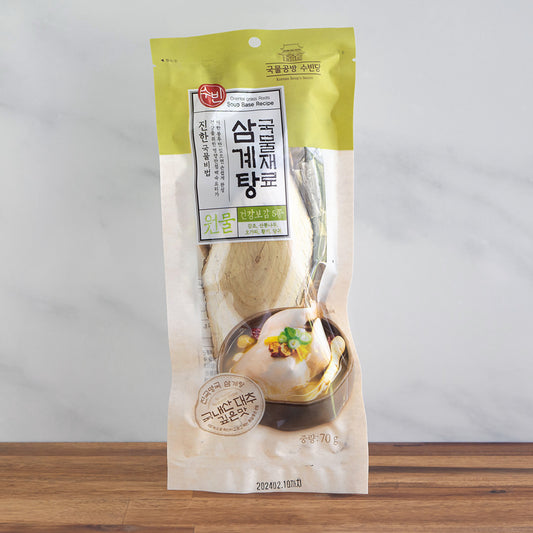
Samgyetang mixes bring together in a single sachet various dried plants and dried roots intended to be simmered. Simply place the contents of the sachet in a large pot with about 1.5 to 2 litres of water, then add the poultry and continue cooking.
The jujube from this section can also go into this soup. For a complete preparation, see our samgyetang recipe.
Korean mugwort, called ssuk (쑥), belongs to another family of dried plants used in cooking. It brings a green colour and a pronounced herbaceous aroma, notably in certain rice cake preparations.

 Sold out