The main families of Asian noodles
To find your way among the different types of Asian noodles, it is better to look at their raw material than at their country of origin. It gives a first indication of the texture, the cooking time and the dishes they are intended for.
- Rice noodles: supple and translucent after cooking, they are used notably in pho and pad thai. They are naturally gluten-free.
- Wheat noodles: this is the largest family. They can be thin or thick, supple or springy, and are found in many Asian cuisines.
- Buckwheat noodles: recognisable by their grey colour and their slightly nutty taste, they are used notably for soba and naengmyeon.
- Sweet potato noodles: transparent after cooking and very springy, they correspond to the dangmyeon used for japchae.
- Konjac noodles: made from konjac root, they have a particularly gelatinous texture. Korea Store does not currently sell any.
This classification therefore makes it possible to understand quickly which noodle to choose, even when the packaging shows very different formats and names.
Which noodle for which dish?
The right question is not only “what are Asian noodles?”, but rather which noodle for which dish. Here are the main matches:
- Pho: flat rice noodles, generally around 5 mm
- Pad thai: flat 5 mm rice noodles
- Japchae: dangmyeon, sweet potato noodles
- Naengmyeon: buckwheat noodles
- Soba: buckwheat noodles
- Jjajangmyeon: wheat noodles
- Kalguksu: wheat noodles
- Guksu: thin wheat noodles
- Udon: thick wheat noodles
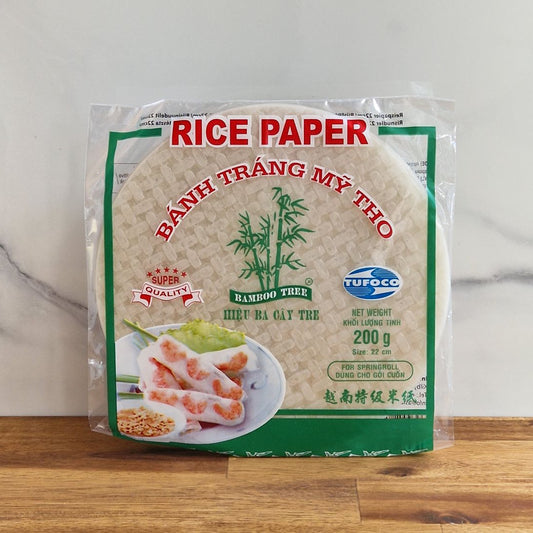
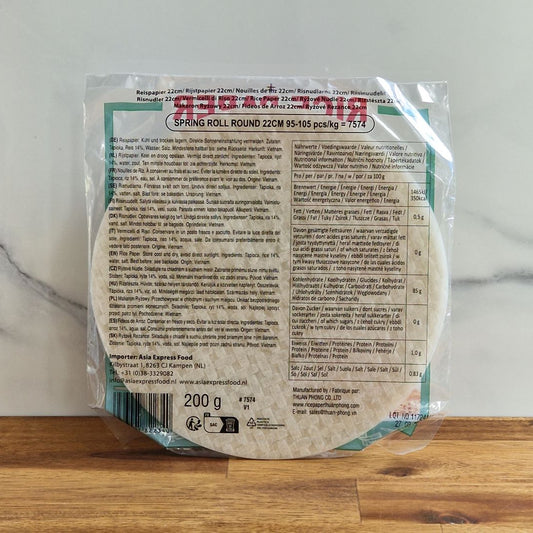
- Spring rolls: rice paper, which is not a noodle
One confusion comes up often in France: japchae is not made with rice noodles. It uses dangmyeon, a noodle made from sweet potato starch. You can find the full preparation in our japchae recipe.
Where do Korean noodles fit into all this?
Korean cuisine mainly uses three large families of noodles: wheat, buckwheat and sweet potato.
Guksu, kalguksu and the noodles for jjajangmyeon are wheat noodles. Naengmyeon notably calls on buckwheat, while dangmyeon, used for japchae, is made from sweet potato starch.
The rice noodle holds a much smaller place in Korean tradition. Rice is mostly eaten there as grains or turned into preparations such as tteok. Rice noodles should therefore not be presented as a Korean speciality: the product offered here is Vietnamese.
To go further on Korean buckwheat noodles, see our mul naengmyeon recipe.
Cooking and storage: what changes from one family to another
The cooking time varies according to the material and the thickness. For the products and families presented here, these benchmarks can be kept in mind:
- Rice noodles: 6 to 8 minutes, then rinsing in cold water.
- Buckwheat noodles: about 4 to 5 minutes.
- Sweet potato noodles: about 6 to 7 minutes; soaking beforehand may be recommended depending on the product.
- Dried wheat noodles: about 5 to 7 minutes depending on their thickness.
After cooking, rinsing in cold water is a common step for Asian noodles. It notably removes the starch on the surface and limits the noodles sticking together.
All the noodles sold by Korea Store are dried noodles that keep at room temperature. There is therefore no refrigerated delivery. For dried products, the storage instructions on each package should still be followed. You can also consult our guide to the basic dried ingredients of Korean cuisine.
Our Asian noodles at Korea Store
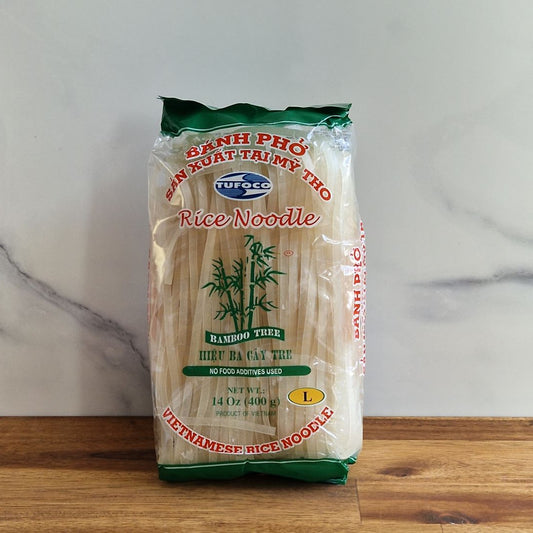
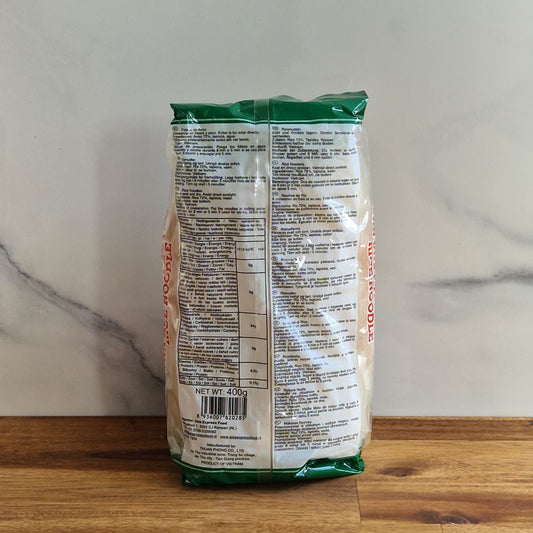
This collection remains deliberately short: it currently holds a single product, the Bamboo Tree rice noodles 400 g, 5 mm wide and of Vietnamese origin.
These noodles are suited notably to dishes such as pho and pad thai. For the other families, the site offers collections dedicated to the different Korean noodles.
Go straight to the Bamboo Tree 5 mm rice noodles to view the product available on this page.
 Sold out
 Sold out