What is Korean red ginseng?
Korean red ginseng is a root of Panax ginseng processed after harvest by a specific method. In Korean, 인삼 (insam) refers to ginseng and 홍삼 (hongsam) to red ginseng. This production is particularly associated with Geumsan-gun, in South Korea, a historic ginseng region where growing and processing the root hold an important place.
A root intended for red ginseng is generally grown for several years before it is harvested, commonly six years. It is then washed, prepared and processed according to the method specific to hongsam. Red ginseng therefore fully belongs to the Korean food and farming tradition, just like other ingredients offered in our savoury Korean grocery.
Red ginseng or white ginseng: it is the process, not the variety
Red ginseng and white ginseng come from the same plant, Panax ginseng, and from the same root: it is the treatment after harvest that sets them apart. White ginseng is simply washed and then dried, whereas red ginseng is steamed and then dried. This steaming step changes the colour, the texture and the aromatic profile of the root.
In Korea, red ginseng is commonly produced from roots that have reached about six years of cultivation, but this age alone does not define hongsam. It is indeed the steaming followed by drying that characterises the process.
This processing gives the root an amber to red colour, a denser texture and a taste different from white ginseng: the vegetal profile gives way more to earthy, rooty, woody and caramelised notes, with a lingering bitterness. Ginsenosides are among the constituents naturally present in the root, without it being necessary to attribute any effect to them.
Concentrated extract or syrup: two ways to taste red ginseng
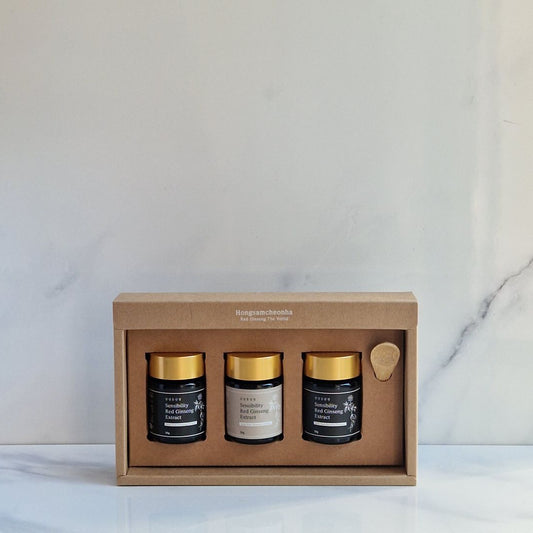
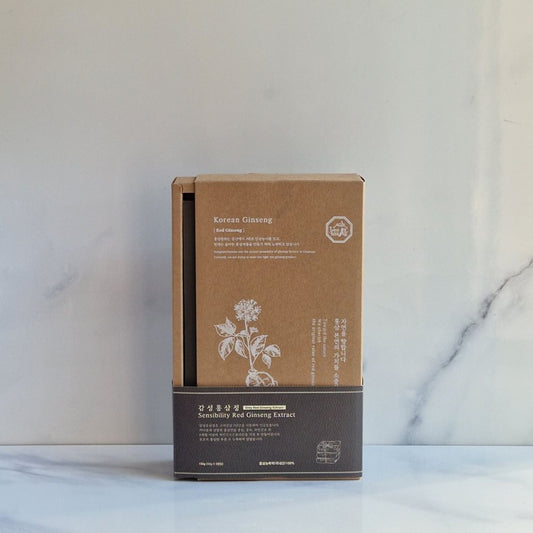
The collection notably offers two formats with very different profiles. The Hongsamcheonha concentrated extract has a thick texture and a frank, earthy and bitter taste. The gift box contains three 50 g bottles, with a measuring spoon. Its composition combines 70 % root and 30 % extract, with no additives.
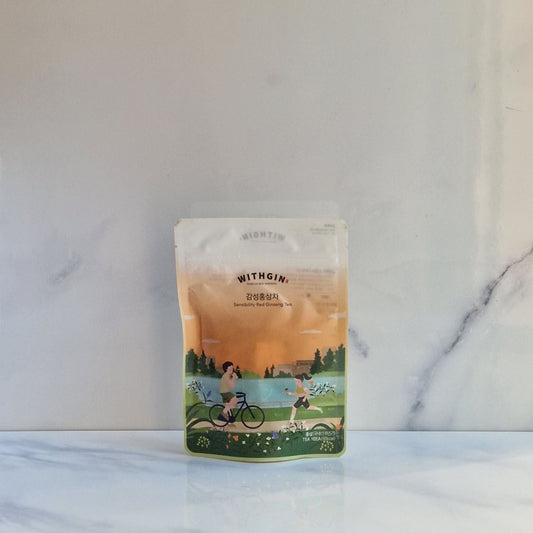
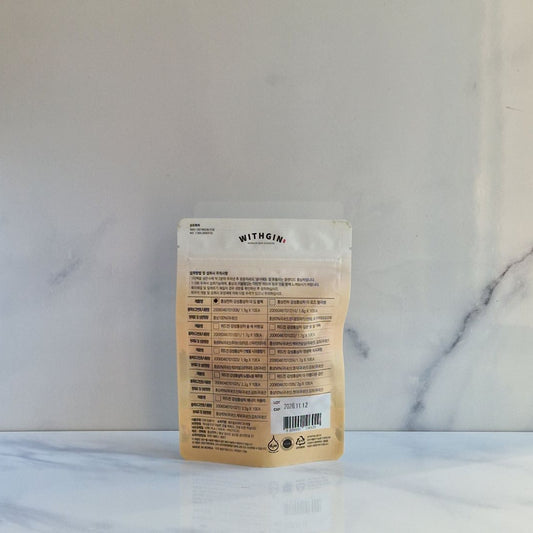
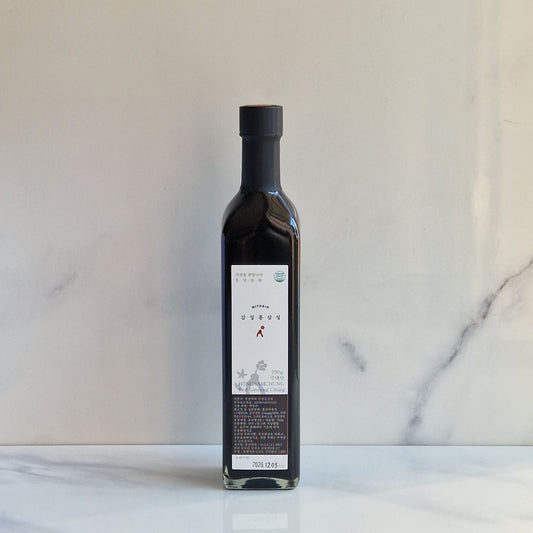
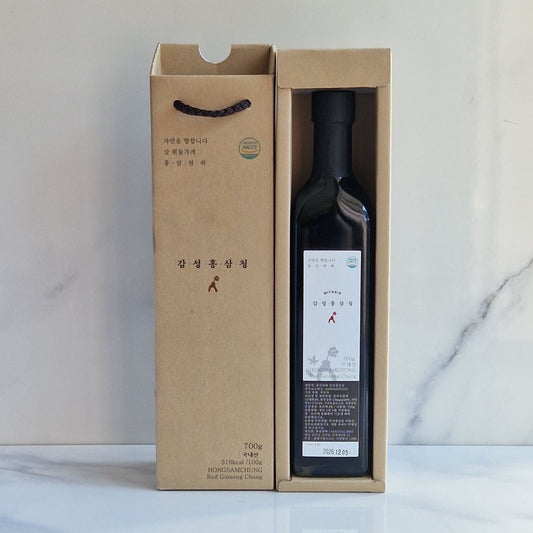
The WITHGIN “Chung” red ginseng syrup contains 20 % red ginseng extract. Its texture is denser and its profile milder, with caramelised notes that make it easier to use in drinks and culinary preparations. The WITHGIN Sensibility range thus offers another way to approach red ginseng, with a less pronounced flavour register.
The choice is above all a matter of the taste you are looking for: the extract suits those who enjoy the characteristic bitterness of the root, while the syrup is easier to work into a preparation. The collection also includes a reference in infusion sachets.
What can you do with red ginseng in the kitchen?
The red ginseng syrup lets you explore hongsam as a culinary ingredient. Diluted in about five times its volume of water, milk or plant-based milk, it can serve as the base for a ginseng latte. Its dense texture also makes it possible to stir it into a yoghurt, to drizzle it over a dessert or a roasted sweet potato, or even to add some to a jeon batter or to certain fried foods. It can also be enjoyed by the spoonful, following the manufacturer’s directions.
Its earthy, rooty profile goes particularly well with preparations where caramelised notes can find their place. To discover red ginseng in a traditional Korean culinary context, samgyetang, a soup of chicken stuffed with glutinous rice, remains an emblematic preparation into which the ginseng root can go directly.
Find our samgyetang recipe, as well as the basic ingredients of Korean cuisine to round out your kitchen.
Hongsamcheonha, the house of Geumsan
Hongsamcheonha is a family business based in Geumsan-gun, with three generations devoted to the production of red ginseng. The house masters different stages of the chain: growing the roots, steaming, extraction and packaging.
Korea Store met the producer during a sourcing trip to Geumsan in October 2024. The three references in the collection come from this same house. WITHGIN Sensibility is its range of milder formats, notably the syrup and the infusion, while Hongsamcheonha also offers the concentrated extract. The extract gift box is available in our Hongsamcheonha selection of concentrated red ginseng.
 Sold out