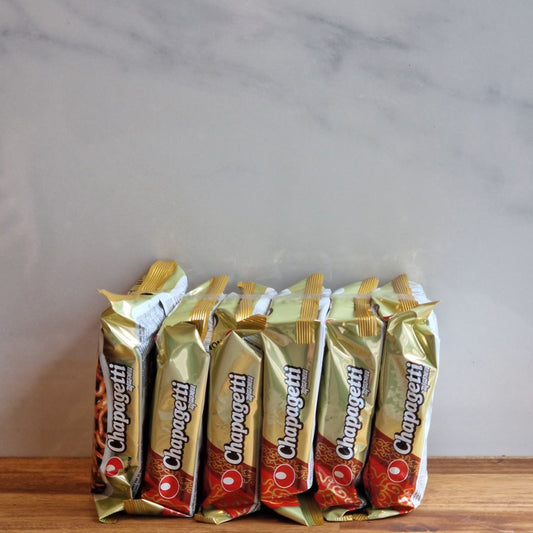
What is Chapagetti?
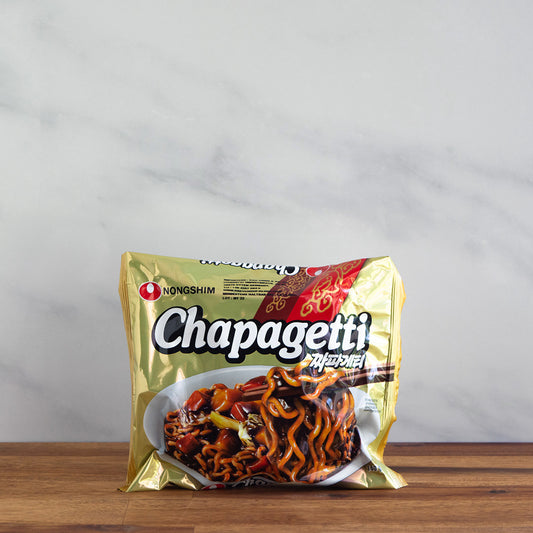
Chapagetti (짜파게티) is a brand of Korean instant noodles created by Nongshim and launched in South Korea on 19 March 1984. Inspired by jjajangmyeon, a noodle dish served with a sauce made from black soybean paste, it offers a quick version to prepare at home.
Its name is a portmanteau: “Chapa” comes from jjajang, while “getti” refers to spaghetti. The result is a dish of thick noodles with a dark, mild and savoury sauce, without broth.
Chapagetti has become a benchmark among instant noodles in South Korea. It existed long before the film Parasite, released in 2019, which helped make the mix known as jjapaguri famous. To understand what is in the packet, the key practical difference to remember is this: Chapagetti is prepared as a noodle dish in sauce, not as a ramen eaten in a bowl of broth.
What does Chapagetti taste like?
Chapagetti has a mild, slightly sweet taste, with umami and roasted soybean notes. Its sauce is inspired by jjajangmyeon and is based on a fermented black soybean paste called chunjang. Onion adds a cooked, slightly sweet note, while the oil sachet added at the end helps bind the sauce to the noodles.
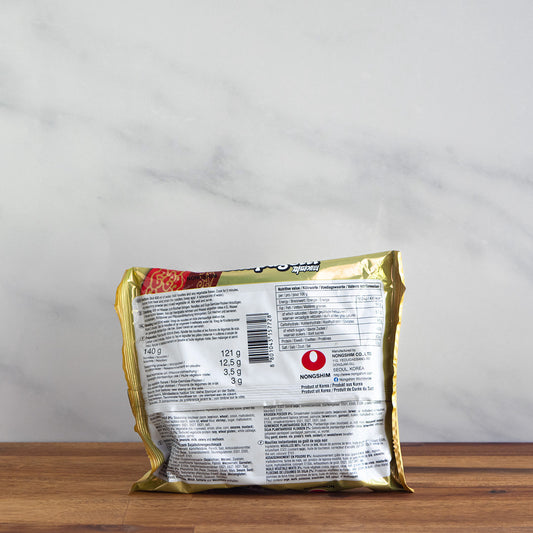
The packet also contains dehydrated vegetable flakes, including onion, cabbage and carrot, as well as textured vegetable protein and pieces of potato. The noodles are thicker than those of many soup-style ramens, which helps them hold the seasoning well.
Two points are worth knowing before choosing this product: Chapagetti is not spicy in its original recipe and it is not a soup. The noodles are drained and then mixed with the sauce. It therefore suits anyone looking for a Korean noodle dish without chilli, with a mild sauce and a pronounced black soybean flavour.
How to make Chapagetti without getting it wrong
The most common mistake is to drain off all the water before adding the seasoning. You need to keep a small amount so that the powder forms a sauce that coats the noodles.
- Bring 600 ml of water to the boil.
- Add the noodle block and the vegetable flakes, then cook for 5 minutes.
- Drain the noodles, keeping 4 tablespoons of the cooking water.
- Add the seasoning powder and the oil sachet.
- Mix off the heat until the sauce coats the noodles, then serve immediately.
A fried egg, kimchi or pickled yellow radish (danmuji) can go with the dish. For a spicier version, you can add gochugaru. See also our recipe ideas with instant ramen and our creamy ramen recipe with tteok and egg.
Jjapaguri (ram-don) from the film Parasite
Jjapaguri (짜파구리), also called chapaguri, is a dish made by mixing a packet of Chapagetti with a packet of Neoguri, two Nongshim products. Chapagetti brings its mild black soybean sauce, while Neoguri adds marine notes and a spicy character. The mix thus combines different flavours in a single dish.
The term ram-don is not the Korean name of the dish. It was invented for the English subtitles of the film Parasite by combining the words ramen and udon, to make the mix easier to understand for an international audience. In Korean, the name used is jjapaguri.
The mix had already been popularised in Korea by the programme Dad! Where Are We Going? in 2013, before reaching an international audience with Parasite in 2019. In the film, it is served with hanu beef. To explore other quick dishes, see our recipe ideas with instant ramen. Korea Store offers both noodles needed to prepare this mix.
Chapagetti or homemade jjajangmyeon: which to choose?
Chapagetti and jjajangmyeon share a common inspiration, but their preparation and texture differ. Traditional jjajangmyeon consists of fresh noodles served with a sauce made from black bean paste (chunjang or jjajang), usually stir-fried in a pan with onion, vegetables and often pork.
Chapagetti takes up this combination in an instant version, ready in 5 minutes. Its sauce is mild and slightly sweet, and it needs few ingredients. It therefore meets a different need: a quick meal, without having to prepare the sauce separately.
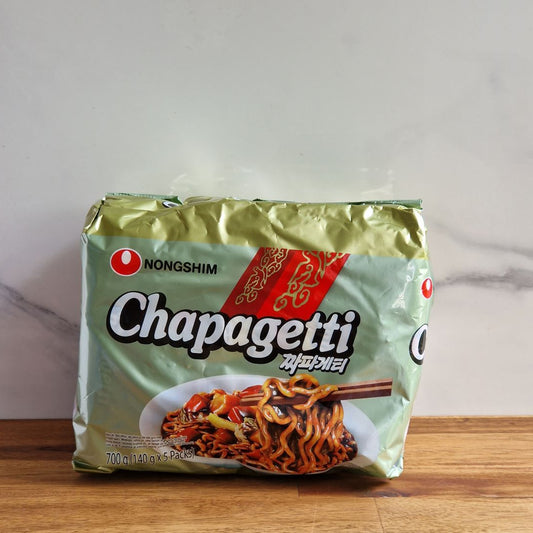
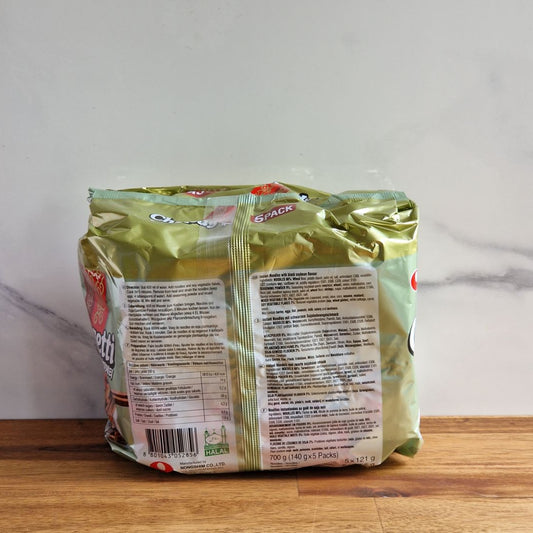
At Korea Store, Chapagetti is available as a single 140 g packet and as a pack of 5. To cook jjajangmyeon from separate ingredients, see our jjajangmyeon recipe and our guide to the essential ingredients of Korean cooking. You can also browse our Korean savoury grocery range to complete your cupboard. The products offered are shelf-stable; Korea Store does not deliver fresh products.